Tuesday, July 29, 2014

Exploring the Kootenays

Part VII 

Hiking in the Rocky Mountains

We are looking at theses grand mountains everyday, this month it was time to conquer a piece of them!
The first on the list was Mt. Teepee. The second highest mountain here in in the Kootenay Rockies, a moderate hike but with an elevation gain of almost 5000 feet over 6 km a cruel one.


Once Mt. Stevens is reached though the views are sure rewarding. Andrea and Trudy celebrating that we got that far and Lexie is is heading for the snow to cool off her paws.


And while I was busy photographing all the alpine micro flora and fauna, Trudy and Andrea spotted a pair of Mountain Goats....I, of course, saw only the fleeing bums...;-)

Purple Saxifrage in the foreground with Teepee "looming" in the back

From the summit of Mt. Stevens it seems to be just a short hike over Mt. Stevens Pass and a quick scramble up Mt. Teepee.

"Alpine" ladybugs at an elevation of 8700 ft.

Well, it only seems quick, in reality it is a loooong and exhausting scramble


But we made it: The Summit Girls!


The views are spectacular, the Rocky Mountain range up to the horizon in the East,

Note: If you click on the images they open up larger in a separate window for a better view. 
Highly recommended for the panorama images!


Premier Lake and the Columbia Valley to the North


and Lazy Lake, Wasa Lake and the Kootenay Valley to the South-West.


The next hike led Mika and me to Bear Lake, a nice and easy hike with some exceptional wildflower views.


Once we got the steep forest trail behind us a nice little valley opened up with bear Lake shimmering in it's middle.


After a short rest on the shore, we decided to hike up to the Bear Lake/Rualt Lake pass to have our lunch with a view. Here a look back to Bear Lake from about half way up.


On the ridge...

View with Rualt Lake in the foreground and Summer Lake in the distance
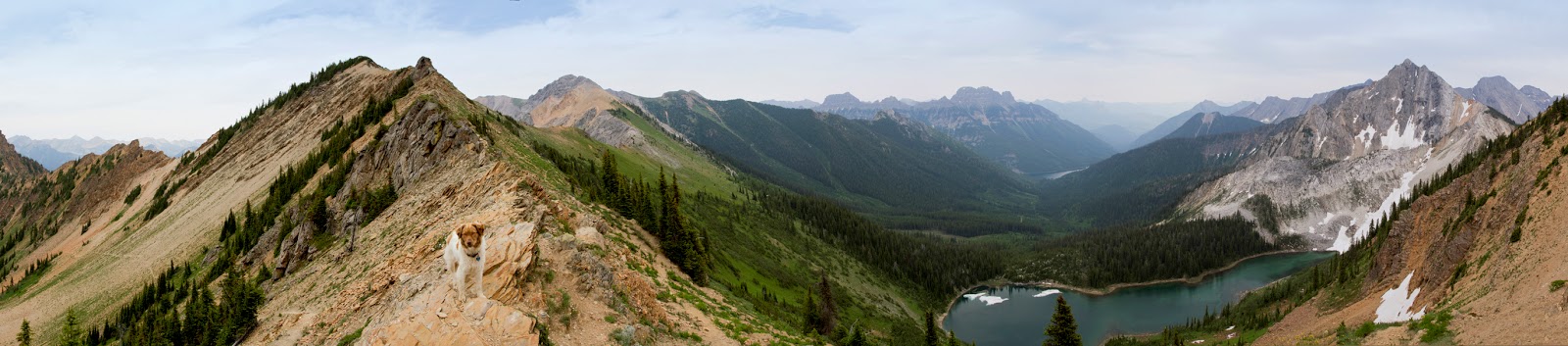


My partners in crime, with one missing....


ah, there he is..;-)


Happy Hiker Selfie


Beautiful wildflowers all over the mountain side...

...unidentified yellow beauty...

...Milberts Tortoise Shell butterfly...

...and my flower girl.


The last and most epic hike was a hike that was on our bucket list since quite awhile. We were ready for it last year, but the spring flood had taken out a good part of the road and the trail head was not accessible. This year though the hiking gods were with us: Fisher Peak


As with almost all hikes here in the Rockies one has to first overcome a steep forested trail. On the Fisher Peak trail this first part leads you to an nice level area with a small creek-fed pond. As Mika put it: "A scene that could be right out of a fairy tale".


The following scramble up to the saddle was my least favorite part of this hike, but the views make up for it.


The climb from the col to the summit was quite an adventure, more than once I asked myself, how in the world would I ever get back down...


But then, seemingly on top of the world, at an elevation of 9336 ft, all worries evaporate and the majestic views are taking over

A 360 panorama taken from the small platform at the summit. 
Please click on the image for a better view


Anise Swallowtail
It surprises me over and over how butterflies and other insects can make a living at these heights.


After one last glance down at this lichen covered rock formation we started our descent. Luckily going down was way easier than anticipated and finally back at the car we agreed that this is a more technically challenging hike than Mt. Teepee but a way less strenuous one.

We had planned to hike to Tanglefoot Lake this last week, but the storm that hit shortly before that had big trees thrown across the road like matches between the Fisher Peak trail head and the Mause Creek parking lot. We will have to postpone that one.

Sources for all these hikes are from Janice Strongs' book:
Mountain Footsteps, Hikes in the East Kootenay of Southwestern British Columbia

Wednesday, July 23, 2014

July Conservation Tip

Edible Flowers

And the flower saga continues on the blog...;-)
Inspired by a post from West Coast Seeds, a Vancouver based store, where I got most of my vegetable and flowers seeds from this year, I went into our garden, of course with my camera at hand, to see with how many edible flowers I can come up with at the moment. Some are already harvested, like the garlic scapes and the basil flowers, some are not blooming yet, as the sage and the sunflowers.
It is funny, I always admired the beauty of flowers, but until recently didn't much think about their nutritional value and taste...time to spread the word!


 Arugula

Since I want to harvest some seed pods from the Arugula this year, I let a few bolt...what a surprise to see how beautifully and delicate it blooms and the flowers add a nice hint of spice in my herb butter (recipe follows).

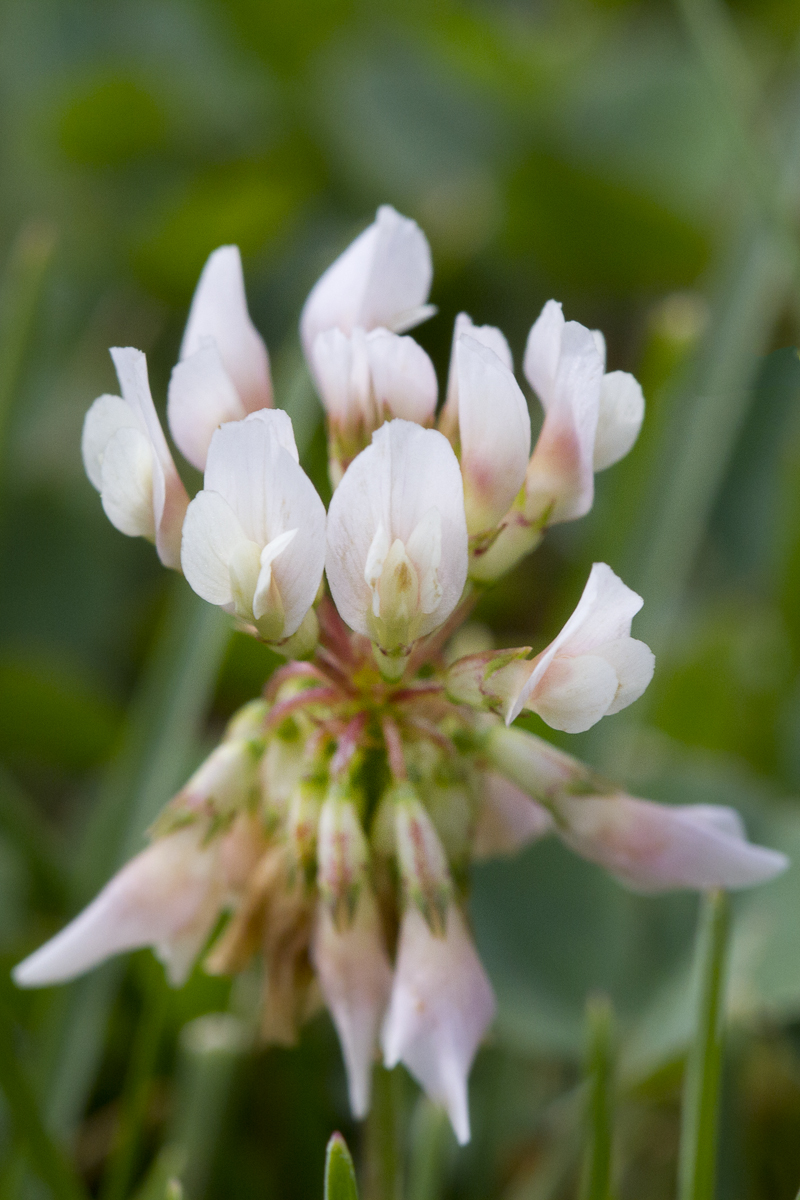
Clover

With all the animals around here there is not much left for me to harvest...but I remember still the days, as kids, when we would suck out the sweet clover...

Daisy

The Daisy is a bit bitter, so try to get the smaller, younger flowers for eating...or just use for decoration.

Pea

Although I rather leave the pea flower on the bush for later pea harvest it sure gives a pea dish a nice touch to add some pea flowers. CAUTION: the flower of the sweet pea might be sweet BUT it is POISONOUS!


Dandelion

One spring flower, so versatile, it even has it's own blog entry:
Long live the Dandelion

Pumpkin

As I just have been told, the Squash and Pumpkin blossoms, sauteed or else, are a big hit in fine restaurants...I will give that a try. But use only the male flowers if you want to harvest any squash or pumpkin.


Calendula

Great for home made ointments as it has healing powers. I usually dry them and infuse oil with the dried petals.

Nasturtium

Love the tasty zing of this colorful flower, great in salads and in, you guessed it right, herb butter!

Oregano

Our favorite herb for spaghetti sauce, now the butterfly has to share with us the flower, too...


Lavender

Another one of my all time favorites, have you tried to make Lavender lemonade yet?

Borage

This herb was new to me. I planted it as companion for the strawberries...glad I did it!

Johnny-Jump-Up

Great for decoration, I personally do not care to much for it's taste.

Dill

The herb is great for salads and herb butter...;-), the flowers are used for pickling.

For more edible flowers and info please see West Coast Seeds post as it is much more detailed.

Herb Butter Recipe

Once a year, at the prime of the herb growth I make herb butter. It's really easy to make and keeps (frozen) for a good year. It's great on all sorts of grilled meat, sandwiches, corn or on a fresh baguette to accompany a salad.

You need:
about 1 lb of butter, either freshly made or store bought at room temperature
salt to taste, 1 - 3 teaspoon(s)
as many herbs a you like, as
chives
rosemary
parsley
mint
basil
dill
oregano
thyme
sage...

As colorful touch and for of course for taste I added the following flowers:

arugula
nasturtium
borage
dill
oregano
and a bit of lavender

minced garlic to taste, about 6 big or 8 smaller cloves


Use all herbs in equal quantities, maybe with exception of the mint. Go easy with it, since it tends to overpower the other herbs.

Wash, dry and chop all herbs
Wash and carefully dab dry the flowers
Mix the garlic with the salt

Prepare the butter and carefully mix all ingredients together. Fill into appropriate storage container, I use 1/2 cup mason jars, and freeze. The herb butter keeps about 1 week in the refrigerator, but not much longer.


Enjoy!


Sunday, June 29, 2014

Kootenay Flower Power

It is simply amazing how the flora around me explodes in spring and early summer...as if all the plants were locked into a small box and then all of the sudden are being released.

The first show of color in spring goes to the Pulsatilla


quickly followed by the Shooting Star


and by the time Arrowleaf Balsamroot colors the hillsides, spring is here to stay.


The following images have all bee taken within the last three weeks, I tell you fair and square, pun intended, that I still haven't managed to learn all my wildflowers. Should I misname a flower here, or if you know the name of one of my "unknown flower" please feel free to leave a comment or catch me on facebook.

Enjoy!


 Three-Spot Mariposa Lily


Little gem, unknown flower #1


Not quite sure on this one, Butter-and-Eggs?


Yellow Salsify...


 ...with it's enormous seed pod


beautiful unknown flower #2


Wild Rose


Pretty in purple, Penstemon?...unknown flower #3


American Vetch


Lupine


Harebell


Boisduval Blue
Not really a wildflower...
Just matched the color scheme so well


And last but not least, 
Blue Flax in all it's beauty


Monday, June 16, 2014

June Conservation Tip

TO BEE OR NOT TO BEE

Bees are in peril...we all have heard it.

Three quarters of all flowering plants and 1/3 of all food plants need pollinators. Although bees being helped with this job by butterflies, bats, birds and more, they are responsible for 80% -90% of all animal depended pollination. With this in mind, being short of honey seems to be the smaller problem.


Why are they dying so rapidly is still under investigation. The so aptly named Colony Collapse Disorder, which describes the faltering of bee hives worldwide, seems to be a caused by multiple factors.

1. To increase crop yield per acre, more and more chemicals have to be used. A few years ago the EPA (Environmental Protection Agency (...really??)) approved the use of  neonicotinoids, or short neonics, which meanwhile have found to be toxic to bees. Just to get an idea of the amount of neonics that are being used, here an excerpt from eXtension: "At some 95 million acres planted this year, corn alone accounts for almost a quarter of the harvested acres in the United States.  It is the largest use of US agricultural land and virtually every seed is coated with neonicotinoid insecticides." (3)
These neonics might not kill the bee directly, but weaken them over time. Eventually they might not be able to feed the colony, will be more susceptible to diseases or can even get lost on the way back to the hive. Earth Justice has a great infograph to this topic: Bees' Toxic Problem 
All of the studies have been done on "domesticated" honey bee colonies, that makes me wonder how contaminated the honey might be AND how the wild bees are faring, as they collect most likely from the same areas....

2. Hand in hand with the use of pesticides goes the loss of habitat due to monoculture crop growing, urbanization and modern "lawn-care". The dwindling variation of food options has impacted the bees' diet and led to malnutrition.

3. Domesticated bees have been bred for a maximum of honey production, efficiency in pollination and non-aggressiveness. A plausible theory suggests that this caused some inbreeding, which resulted in a decline of diversity and resilience to natural enemies.

4. Varroa destructor...the name says it all. The mite that drives bee-keepers insane since the 80s is still around. There are methods to deal with the mites, but with bees weakened by chemical overload, loss of habitat and inbreeding the Varroa mite is still a big threat to the honey bees.


This seems overwhelming, but every one of us can help!

Gardening?
Plant bee friendly plants, BuzzAboutBees has a great collection of suggestions, as has the David Suzuki Foundation.
Please let weeds be(e), at least dandelions and clover!
Don't use herbicides or pesticides in your garden.
Instead of a perfectly "mowicured" lawn, try a wild flower meadow.
Bees are thirsty! Provide them with a "watering hole". Any shallow bowl will do, put a few rocks in it and fill it with fresh water but leave some of the rock surface exposed. Place it strategically near the plants that can profit from pollination. Change the water often.

Buy local honey to encourage local bee-keepers to stay in business.

Buy local and ORGANIC food. Among all other advantages, organic food has not been treated with neonics!!

Spread the word! Share bee related information as this blog and help inform others.

Add your name...there are multiple organizations that are fighting for the bees and hence for us, give them your support:

Greenpeace
Sierra Club
Xeres Pollinator Protection Pledge
Earth Justice
Bee lovely and help save the bees via Care2


Sources:

Earth Justice: Down to Earth
Earth Justice: Infographic: Bees' Toxic Problem
eXtension (3)
Rabobank: The plight of the Honey Bee
rcinet: Canadian conference on the worrisome decline of bees
Greenpeace blog
The Xeres Society: Bring back the pollinators
Care2: Our bees are dying


BTW, I was desperately looking for bees to photograph this spring for this blog...I saw one! and of course I didn't have a camera at hand...All the above images are from my archive. We had a hard winter and I sure hope I will see more bees this summer.